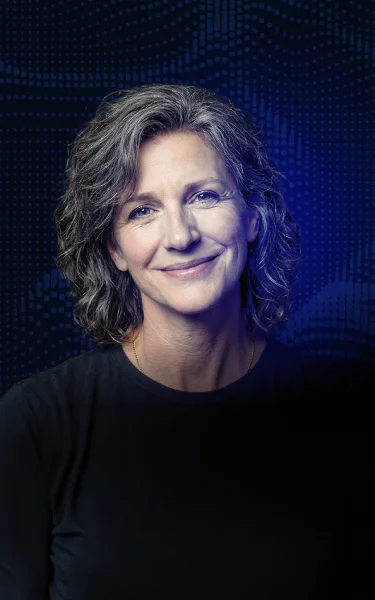

In July 2026, OptimizeRx was delighted to welcome Sarah Bast to OptimizeRx as our new Chief Marketing Officer. She joins our team following a storied, 18-year career at Publicis Health Media, where she was instrumental in building point of care marketing strategies to support leading companies like Lilly, Bayer, Johnson & Johnson, and AstraZeneca.
We sat down with Sarah to learn more about what prompted the move to OptimizeRx, what she is excited to accomplish, and how she sees the point of care marketing landscape evolving in the coming years.
You’ve spent much of your career looking at the point-of-care ecosystem from the agency and brand side. What made OptimizeRx the right place for your next chapter?
Throughout my career helping brands navigate the point of care ecosystem, I’ve seen firsthand what distinguishes a true strategic partner from just another solution provider. OptimizeRx has long been one of the foundational companies in this space, with the technology, relationships, and credibility to reach healthcare professionals during moments that can impact care.
What made this opportunity especially compelling was the chance to help shape what comes next. OptimizeRx is expanding beyond traditional definitions of point of care by connecting HCP and patient engagement more intelligently across the healthcare journey. After years of advising brands and evaluating solutions from the outside, I was excited by the opportunity to bring my perspective to their work—helping simplify complexity, strengthening partnerships, and building solutions around the challenges marketers are actually trying to solve.
Now that you’re on the inside, what has surprised or excited you most about the capabilities, people or opportunities at OptimizeRx?
I knew OptimizeRx had strong technology and deep roots in point of care, but I’ve been especially impressed by the breadth of what the company can do. There is a real ability to connect clinical signals, audience intelligence, and multiple channels in ways that make engagement more relevant for both HCPs and patients.
I’ve also been struck by the strength of the team. They combine deep technical expertise with a genuine understanding of healthcare and a powerful commitment to helping their clients succeed. That combination is powerful, and a true differentiator in the industry.
What excites me most is the opportunity to bring these strengths together more clearly. We can help marketers move beyond fragmented tactics toward synchronized strategies that connect patient and provider engagement and drive meaningful action and conversion, not simply generate more impressions.
Over your 18 years at PHM, you’ve had a front-row seat to the evolution of healthcare marketing. Where do you think the industry is still making things harder than they need to be for brands, providers and patients?
Healthcare marketing has become more sophisticated, but sophistication has also created complexity. Brands are managing more channels, more partners, more data and more technology than ever, yet those pieces often remain disconnected. For example, HCP and patient strategies are typically developed separately, even though they ultimately need to support the same healthcare decision.
That fragmentation makes it harder for marketers to understand what is working, harder for providers to receive useful information at the right moment, and harder for patients to move through an already complicated care journey.
The opportunity is not to add another channel or platform. It is to make the existing ecosystem work together more intelligently—with greater coordination, clearer measurement and a relentless focus on relevance and utility. When we reduce friction for marketers, providers and patients, better business performance and better healthcare experiences can follow.
{{quote}}
Point of care marketing has evolved dramatically beyond simply reaching the care setting. What does the next generation of point of care engagement look like to you?
The next generation of point of care is less about a location and more about a moment: when an HCP is evaluating a treatment, when a patient is preparing for a conversation, or when both need support to take the next step.
That requires us to understand the clinical journey and use privacy-safe intelligence to make engagement timely, relevant, and actionable. It also means connecting point of care with the broader media ecosystem rather than treating it as a standalone channel.
The future is synchronized. Patient and HCP communications should reinforce one another, respond to real-world context and help move people from awareness to action. The goal is not to insert more messages into the care experience. It is to provide the right information at a moment when it can genuinely help advance care. Every message needs to have a utility in that exact moment.
As CMO, where do you see the biggest opportunity for OptimizeRx to change the way life sciences marketers think about reaching HCPs and patients?
The biggest opportunity is to help marketers stop thinking about HCP and patient engagement as two separate strategies. Providers and patients are part of the same treatment journey, but marketing organizations, budgets and measurement frameworks often divide them into different worlds.
OptimizeRx can help connect those worlds. By combining clinical context, privacy-safe audience intelligence, and coordinated channel activation, we can enable brands to engage patients and providers in complementary ways while remaining focused on measurable outcomes.
I also want us to broaden the definition of what successful healthcare marketing looks like. Reach and impressions still have a role, but they are not the end goal. We should be asking whether engagement helped accelerate a productive conversation, support a treatment decision, improve a patient start, or reduce friction on the path to therapy.
Looking ahead to the future, what do you hope will be different about healthcare marketing because of the work you and the OptimizeRx team are doing?
I hope healthcare marketing becomes more connected, more useful, and more human. For brands, that means less fragmentation and a clearer understanding of how their investments contribute to meaningful outcomes. For providers, it means receiving relevant information without adding unnecessary noise or disruption to their workflows. For patients, it means encountering support that makes the path to appropriate care easier to understand and navigate.
Ultimately, I would like our work to help shift the industry from delivering isolated messages to supporting coordinated healthcare journeys. If we can use technology and data responsibly to connect the right people with the right information at the right moment, marketing can do more than influence behavior. It can help remove barriers, support better conversations and enable patients to begin appropriate therapies sooner.
Reach and impressions still have a role, but they are not the end goal. We should be asking whether engagement helped accelerate a productive conversation, support a treatment decision, improve a patient start, or reduce friction on the path to therapy.
