


Physician Refill Alerts in the EHR
Reach Prescribers with Timely, Brand-Specific Refill Reminders in the EHR
Optimized For Outcomes
Physician Refill Alerts help brands support continuity of care through timely prescription refill reminders that prompt physicians when a patient may be due for a refill. Using patient chart signals, OptimizeRx surfaces timely, brand-specific reminders directly within the EHR workflow, bringing adherence support into the moment when the provider can act.
When activated in our proprietary network of over 400 EHR platforms and 1.1M+ HCPs, Refill Alerts help reduce therapy gaps, reinforce the importance of ongoing treatment, and keep the brand visible at critical points in the patient journey. For life science brands, they create a workflow-based opportunity to support adherence while driving measurable brand performance.





Activation & Capabilities


Timely, In-Workflow Intervention
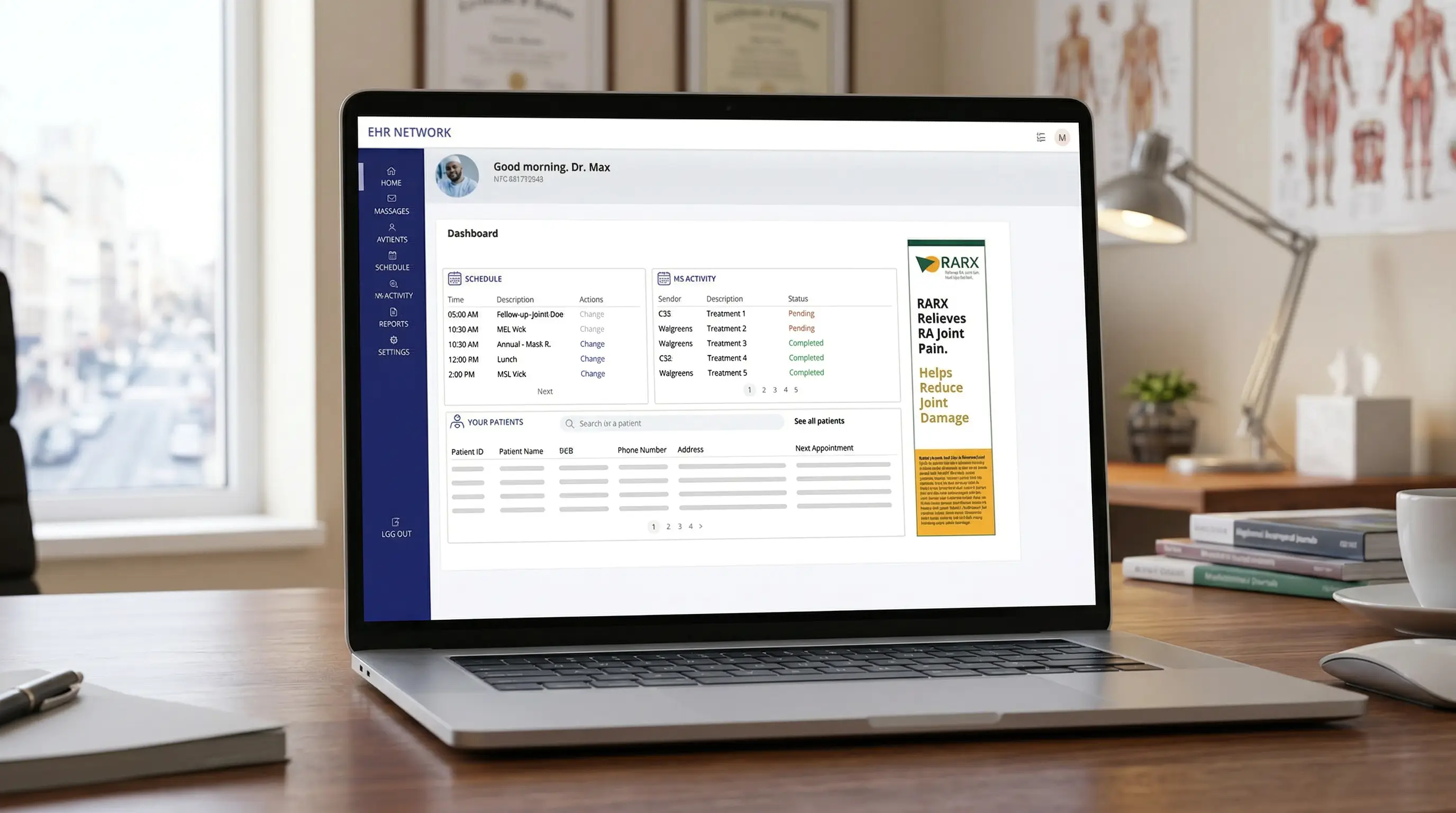
EHR refill alerts appear directly in the physician's prescribing workflow, supporting patients before therapy gaps occur. Alerts display clearly as sponsored copy (e.g., “Sponsored by BRAND”) alongside standard refill reminders.

Precision Targeting
Programs are primarily triggered by NDC and can be optionally refined by National Provider Identifier (NPI), geography, or age to align perfectly with your brand objectives.

Data-Driven Relevance
The solution leverages patient chart look-back windows (12-months is recommended best practice) to ensure alerts are clinically meaningful and to reduce unnecessary noise for prescribers.

Improved Adherence & Persistence
By proactively addressing refills, alerts help reduce abandonment and ensure patients stay on therapy longer, leading to better clinical outcomes and stronger brand loyalty.
Sharing big wins and bold ideas.
Healthcare marketers use our research, case studies, and presentations to inspire their strategies.

Healthcare marketing is evolving.
Ready for more than just a data vendor?

POC/EHR
OptimizeRx delivers brand content directly into the clinical workflow OptimizeRx delivers brand content directly into the clinical workflow

Health System Targeting
Extend your HCP reach beyond "in-workflow" electronic health record (EHR) screens with an institutional surround-sound approach
CopayCue
OptimizeRx delivers targeted, brand-specific copay cost and coverage directly into the prescribing workflow

Pharmacy Alerts
Always-on activation that integrates directly into the EHR Workflow

Audio
Engage prescribers with high-attention audio beyond the point of care

Social
Extend your brand's reach into the daily digital environments where HCPs actually spend their time
Programmatic
Engage HCPs in "blue jean" vs. "white coat" moments across digital channels with deterministic precision

TV
Engage prescribers with high-impact video beyond the point of care

Online Video
Engage HCPs in "blue jean" vs. "white coat" moments with high-impact video beyond the point of care

CTV
Stay updated with the latest trends and innovations in the tech world.
The questions we get from teams marketing to HCPs.
These answers cover how we help brands find the right people, earlier and without guesswork or risk.
Our alerts are primarily triggered by the presence of a specific National Drug Code (NDC) in a patient's chart. As a best practice, we utilize a 12-month patient chart look-back window to ensure the alerts are clinically meaningful and accurately identify patients who are due for a refill, reducing unnecessary noise for prescribers.
Yes. While the NDC is required as the primary trigger, your campaign can optionally be refined by specific NPIs, geography, or patient age to align perfectly with your brand objectives. However, please note that over-narrowing your targeting criteria will reduce the overall frequency of your messages.
The refill reminders appear directly within the physician’s EHR prescribing workflow, alongside standard refill reminders. To ensure transparency, the alerts clearly display as sponsored copy (e.g., “Sponsored by [Manufacturer]”).
Yes, there is a strict character limit of 244 characters or less, which includes spaces and the required sponsorship disclosure. We highly recommend keeping your copy short and simple. Additionally, all copy must be reviewed by OptimizeRx and our network partners, prior to launch, so custom messages may require additional time for launch approvals.
Physician Refill Alerts are a fully Managed Service. OptimizeRx experts will oversee your program's setup, deployment, and ongoing optimization to maximize effectiveness, allowing your team to focus on brand strategy while receiving timely performance reporting
Physician Refill Alerts are brand-specific prescription refill reminders delivered within a healthcare professional's EHR workflow. OptimizeRx uses patient chart signals to identify when a patient may be due for a refill, allowing brands to deliver relevant, sponsored messaging at a point when the prescriber can take action.
EHR refill alerts help healthcare professionals identify potential refill needs during the prescribing workflow. By surfacing timely reminders based on medication information in the patient chart, these alerts create opportunities to address potential therapy gaps and support continuity of treatment.