


Healthcare consumers are more than their demographics and diagnoses. That's why life science marketers should be taking a deeper look at their brand-eligible audiences, beyond just disease prevalence or brand awareness metrics. Patients experience the same condition differently, interact with care in different ways, and engage with different channels depending on the condition itself, age, gender, health literacy, and life context.
When media strategies fail to account for these differences, even well-funded campaigns don't always lead to improved patient health outcomes—especially when motivation, access, and emotional readiness vary widely.
To illustrate how advanced consumer, healthcare, and media intelligence can be used to enhance media strategies, OptimizeRx analyzed consumers affected by Seasonal Affective Disorder (SAD). Here's what our analysis revealed.
Social Determinants of Health in SAD Patients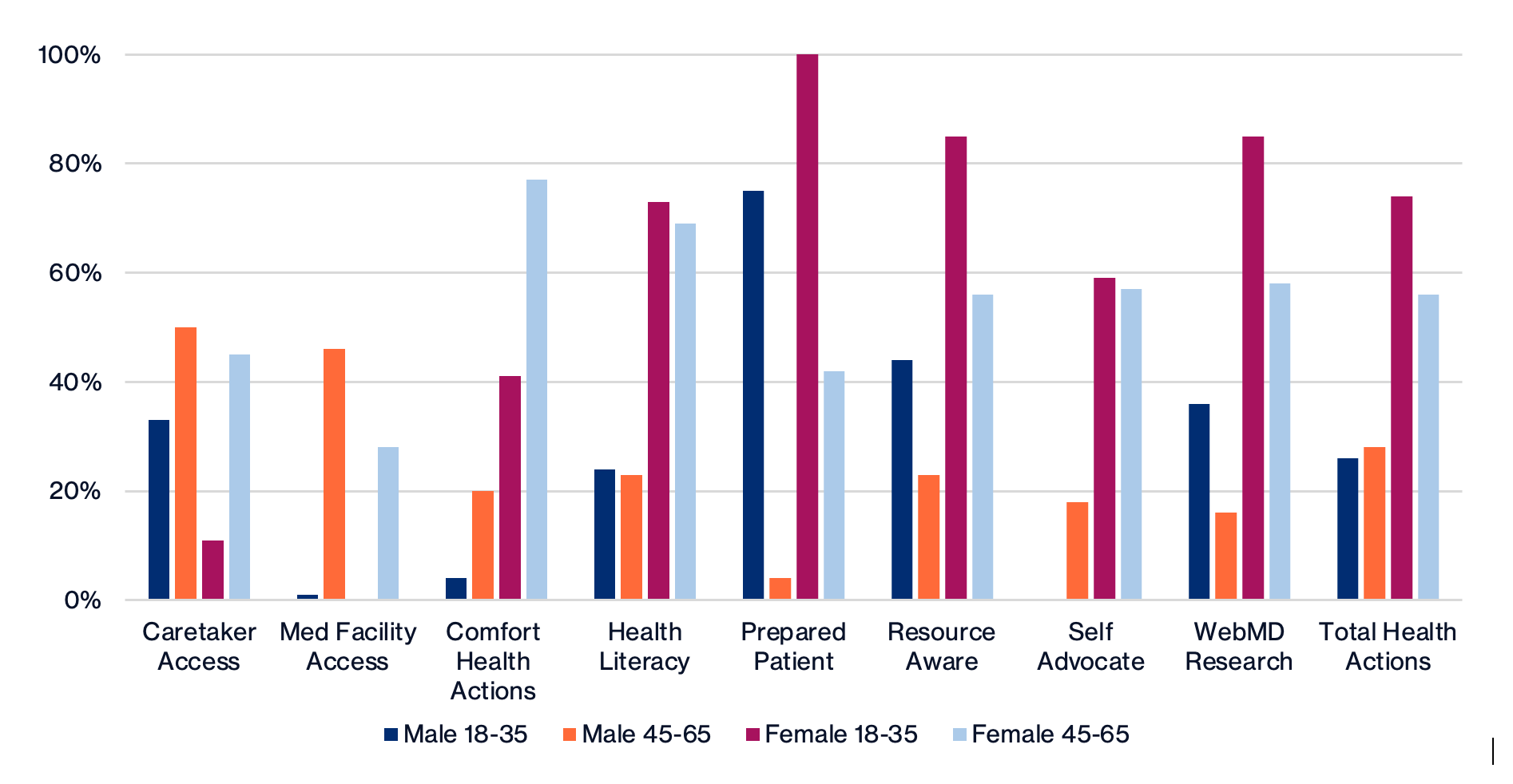
Social determinants of health (SDOH) help marketers move beyond broad demographics and design DTC strategies that reflect how people actually live, access care, and make decisions. For example, while overall prevalence of SAD skews younger and female, older adults and men are also affected, and show notably different behaviors and challenges when it comes to managing their healthcare.
- Younger women are the most proactive and self-directed group, demonstrating high health literacy, preparedness, self-advocacy, and research behaviors, and often finding treatment options independently.
- Younger men are less likely to take action, as they show lower self-advocacy and few concrete health actions. They could benefit most from low-friction, highly accessible support.
- Older men rely more heavily on caretakers and medical facilities but are generally less prepared for physician appointments, and may struggle with low health literacy, suggesting that education-focused approaches may be more successful.
- Older women have less access to medical facilities than older males, but they seek health knowledge, and consistently advocate for their own care. They could be supported with integrated, clinician-led approaches.
Media Channel Engagement and Preferences
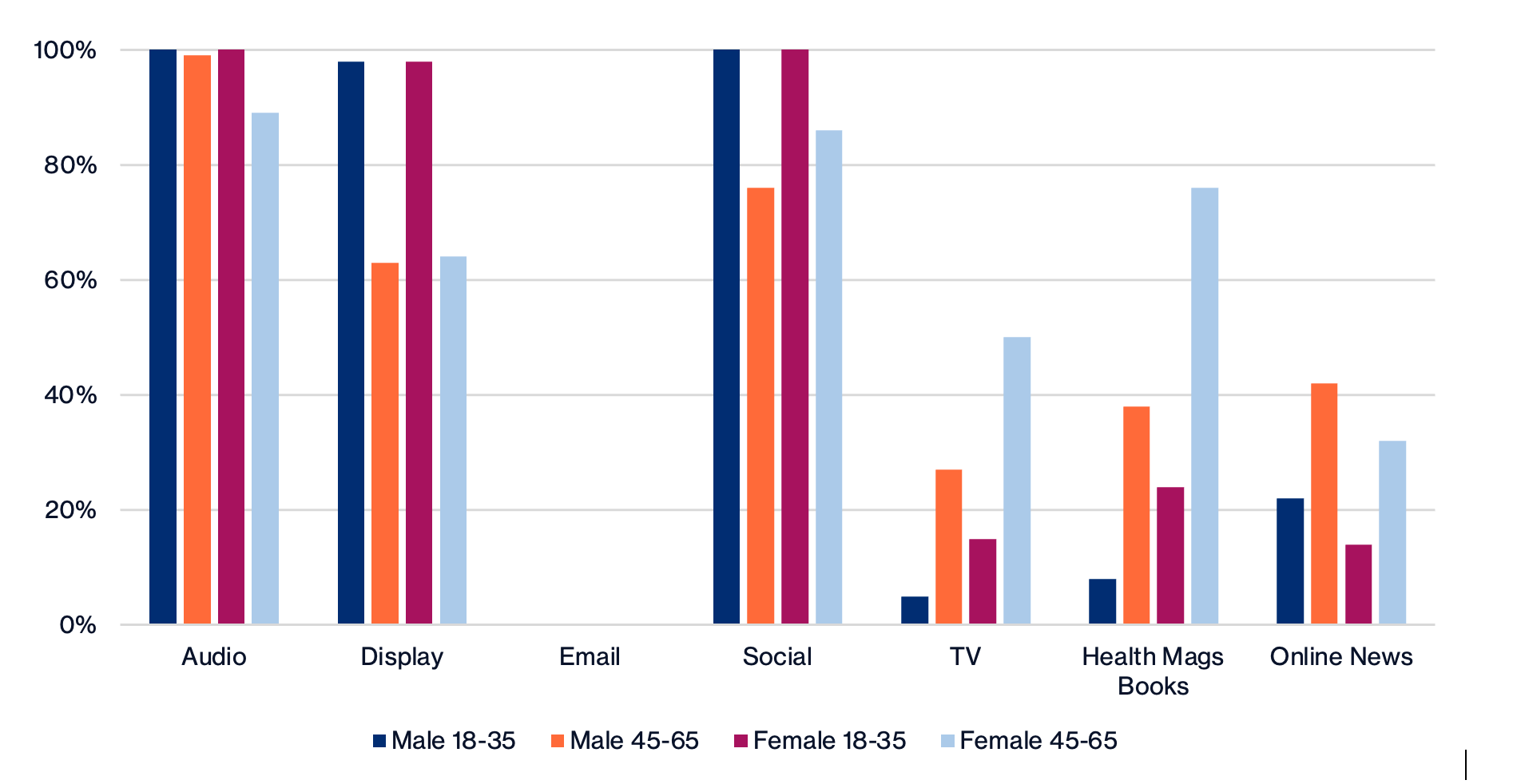
Beyond behavioral differences, the research also reveals clear patterns (and differences!) in media consumption across these four cohorts that should be accommodated when designing disease or brand awareness DTC programs.
- Audio and social channels dominate across all groups, with near-universal audio usage and high social engagement, especially among younger patients.
- Display advertising is well-received among younger patients, however, engagement drops noticeably with age, which may limit its effectiveness as a go-to tactic for all audience segments.
- Gender differences widen with age, as older women engage far more with traditional health information sources than older men, suggesting opportunities for multi-channel strategies tailored by age and gender.
Decision Making Patterns and Profiles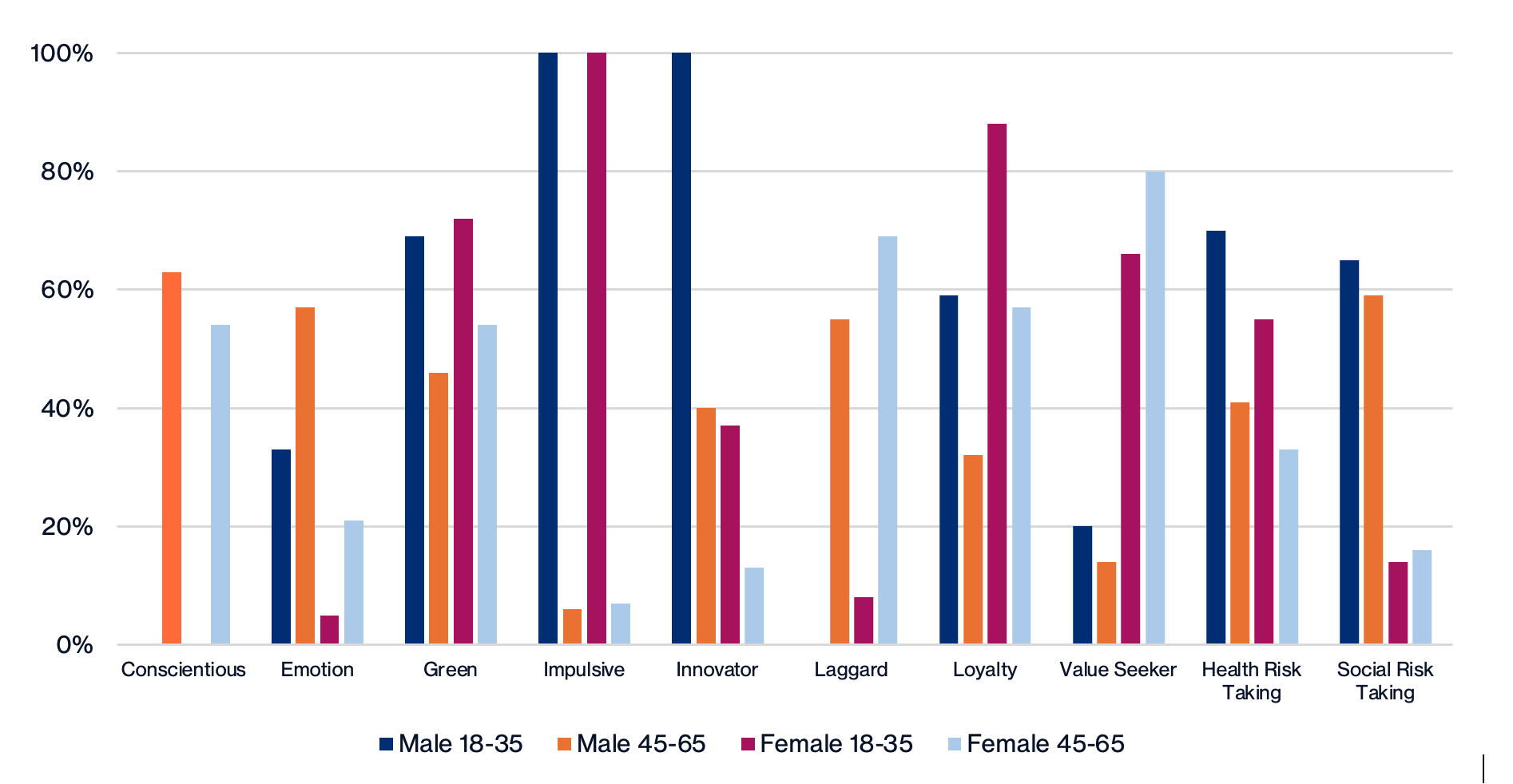
While understanding how different patient segments engage with health information and media channels are key to building an effective media strategy, it's also important to consider how decisions are made, including overall risk tolerance. These insights, along with health equity patterns, can be exceptionally valuable in shaping the most effective brand messaging, and determining when and where to target patients in their care journey.
- Younger patients tend to be more impulsive and motivated by immediacy, meaning they respond best to simple, mood-sensitive actions rather than long-term planning.
- Younger men are more open to innovation and new tools, while younger women are more loyalty- and value-driven.
- Older patients are more conscientious, cautious, less likely to adopt new therapies, and emotionally influenced, likely preferring proven, clinician-endorsed solutions and clear reassurance during symptomatic periods.
- Risk tolerance declines with age across all groups. Women, especially older women, strongly seek value, affordability, and practical benefit.
- 18-44 year old males
- 18-44 year old females
- 45–65 year old females
- 45-65 year old males
How Deeper Audience Intelligence Drives Better Outcomes
When pharma marketers move beyond demographics and apply more robust audience intelligence to their healthcare marketing, their DTC strategies become more targeted, meaningful, and effective. By considering the whole patient—shaped by behaviors, motivations, and real-life constraints—marketers move from "awareness at scale" to greater relevance. And that allows patients to see a path forward that fits their lives, not just their diagnosis.
Ultimately, this level of relevance strengthens the connection between marketing efforts and real-world health outcomes. Deeper audience insights align messages and channel allocation more closely with real patient needs and behaviors—reducing friction in the care journey, encouraging earlier action, and enabling more productive patient–provider conversations. The result is more effective marketing and a better overall patient experience.
Research Methodology
This analysis uses OptimizeRx's de-identified, U.S. healthcare claims and behavioral data for consumers (>age 18) to assess how patients with Seasonal Affective Disorder (SAD) seek care, engage with health information, and make decisions. The study examines a sample of 55k patients with major depressive disorder (MDD) across two consecutive winter seasons (November–March 2023–2024 and 2024–2025). 4 cohorts were analyzed:
Findings are intended to highlight directional trends, not to diagnose or predict individual behavior. The analysis is designed to inform DTC media planning.
